
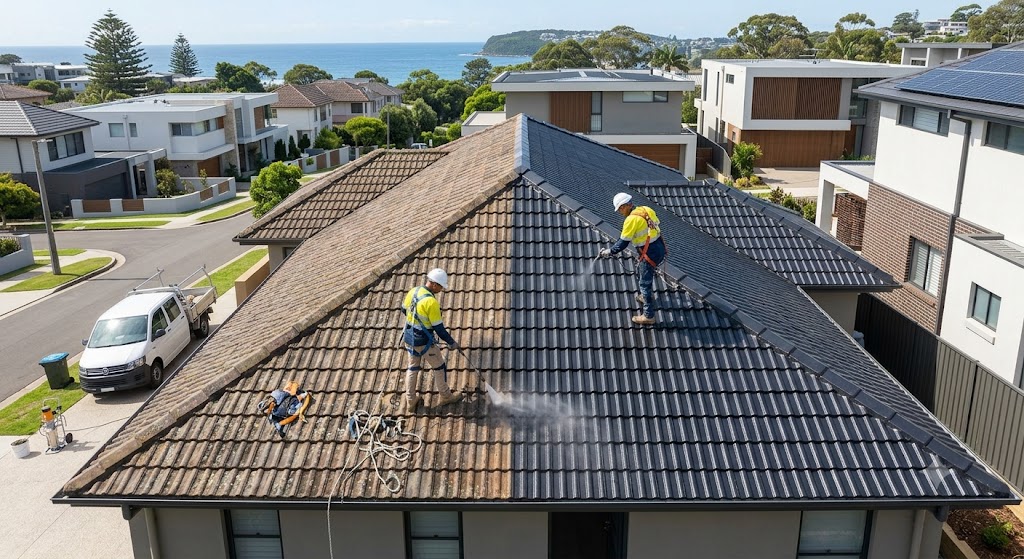
Here’s a fun little fact about roofs: they’re professional liars. Not in a malicious way — they’re just doing their job, which is to sit up there, look presentable, and keep the drama to themselves. A roof doesn’t clutch its chest and collapse the moment something goes wrong. It suffers in silence for years, quietly letting moisture creep in, tiles crack, and gutters clog, all while presenting a perfectly respectable face to the street.
So when you stand on your front lawn, squint up at your roofline and think, “yeah, nah, she’s right” — you might genuinely be looking at a roof that’s already in trouble. You just can’t see it from down there. That’s the whole problem.
This is where Mr Roofer comes in. We’ve spent years crawling around Sydney rooftops — from Cronulla to the Hills District, through blistering summers and the kind of sideways rain that makes you question your life choices — and if there’s one thing we’ve learned, it’s that “looks fine” and “is fine” are two very different sentences.
Let’s talk about the gap between them.
The Sneaky Thing about Roof Damage
Roofs don’t fail loudly. They fail in millimetres. A hairline crack in a tile here, a lifted piece of flashing there, a bit of moss quietly working its roots into a joint. None of it looks urgent. None of it screams for attention. And that’s exactly the trap — by the time damage is visible from the ground, it’s usually been building for a long time underneath the surface.
Sydney’s climate doesn’t help matters. We get harsh UV that bakes protective coatings until they crack, salty coastal air that corrodes metal fixings if you’re anywhere near the water, and storm seasons that dump enormous volumes of rain in short bursts. Add humidity that encourages moss, lichen and mould to move in rent-free, and you’ve got a recipe for a roof that’s ageing faster than it looks.
Roofing Sydney-wide deals with this exact mismatch every day: homeowners who are shocked to learn their “fine” roof needs real work, simply because nobody told them what to actually look for.
Signs Your Roof Is Faking It
Before you take your roof’s word for it, here are the tells worth checking — most from the safety of the ground or your ceiling space, no ladder heroics required.
- Granules in the gutters. If you’re cleaning your gutters out and finding gritty sand-like debris, that’s the protective granule layer coming off your tiles or shingles. Not a great sign.
- Discolouration or dark streaking. Often mistaken for “just dirty,” this is usually algae, moss or lichen getting comfortable — and it holds moisture against your roof surface, which speeds up deterioration.
- A ceiling stain that “isn’t that bad.” Even a faint yellow-brown ring on your ceiling means water has found a way in. Small stain today, bigger problem tomorrow.
- Sagging ridge lines. Stand back and look at the roofline from the street. A dip or wave that wasn’t there a few years ago usually means structural movement underneath.
- Higher power bills in summer. A roof that’s lost its reflective coating or has damaged insulation underneath will let more heat through, and your air conditioner will absolutely let you know about it.
- Rust spots on metal roofing. Small orange freckles today, potential leak points tomorrow — especially around screw fixings and joins.
- Loose or cracked ridge capping. Mortar bedding on tile roofs dries out and crumbles over time, especially after 15–20 years, leaving ridge caps loose enough to shift in strong wind.
None of these individually mean your roof is about to fall in. But together, they’re your roof waving a small, polite flag that says “when you get a chance, mate.”
What’s Actually Happening Up There?
Think of a roof less like a hat and more like a system. Tiles or sheeting are just the top layer — underneath there’s sarking, battens, flashing around penetrations like vents and skylights, and a whole network of joints where water is supposed to be redirected rather than absorbed. When any one part of that system weakens, the rest starts compensating, usually badly.
This is why a proper roof inspection looks completely different from a five-second glance out the bedroom window. It involves checking flashing seals, ridge capping, valley gutters (a notorious weak point — leaves collect there and hold water against the roof), fixings, and the general condition of the roofing material itself. It’s detailed work, and honestly, it’s not something you want to DIY from a wobbly extension ladder on a Sunday afternoon.
Roof Restoration Sydney: Turning “Looks Fine” Into Actually Fine
This is where roof restoration earns its keep. A full restoration isn’t just a cosmetic touch-up — it’s the process of repairing damaged tiles or sheeting, rebedding and repointing ridge capping, treating rust on metal sections, sealing valleys, and rebuilding the roof’s ability to actually do its job: keep water out and heat reflected.
Done properly, a restoration can add 10-15 years back onto a roof’s working life, which is a genuinely good return compared to a full tear-off and replacement. It’s the difference between patching a leak and actually fixing why it kept happening in the first place. For a lot of Sydney homes — particularly older tile roofs in suburbs with plenty of established tree cover — restoration is the smarter, more cost-effective path, and it’s usually the first thing we recommend once an inspection turns up genuine wear rather than just surface grime.
The Underrated Power of a Proper Clean
Sometimes what looks like “the roof is dying” is actually just “the roof is filthy,” and a professional roof cleaning make a startling difference. But this isn’t about aesthetics only — moss, lichen and algae aren’t just unsightly, they physically hold moisture against the roofing material, work their way under tile edges, and accelerate the exact deterioration we’ve been talking about.
A soft-wash or pressure-controlled clean (the pressure has to be right — too aggressive and you’ll strip protective coatings or crack ageing tiles) removes that biological growth and buys your roof genuine extra life, not just a better Instagram angle. It’s also the step that reveals what’s actually underneath — sometimes a clean roof turns out to need very little else done to it, which, fair enough, is the best kind of news to get.
Why Roof Painting Isn’t Just a Colour Choice
There’s a common misconception that roof painting is purely decorative — pick a shade, slap it on, done. In reality, a quality roof coating is doing serious functional work. Heat-reflective paint systems can noticeably reduce the amount of solar heat transferred into your roof cavity, which flows straight through to lower energy bills in a Sydney summer. The coating also acts as a protective membrane over tiles or metal sheeting, sealing hairline cracks, resisting UV breakdown, and giving the roof surface a fresh layer of weatherproofing.
Colour matters too, obviously — nobody wants a roof that clashes with the brickwork — but the real value is in the protection that coating provides for the next decade-plus.
Don’t Forget What’s Hanging Off the Edge
Roofs get all the attention, but gutters are doing the unglamorous grunt work of actually moving water away from your home. A blocked gutter doesn’t just mean overflow during a storm — it means water sitting against your fascia, potentially backing up under roof edges, and creating exactly the kind of trapped moisture that rots timber and invites leaks.
Regular gutter cleaning is one of the cheapest, easiest ways to protect the much bigger investment sitting above it. If you’ve got overhanging trees nearby (and let’s be honest, most Sydney backyards do), your gutters deserve a check at least twice a year, more if autumn leaf drop is heavy in your area.
DIY vs Calling in the Professionals
We get it — there’s a certain satisfaction in doing things yourself. But roofing sits in a different category to painting a fence or mowing the lawn. You’re working at height, on a sloped and often slippery surface; with materials that can crack under the wrong footstep (tile roofs are notoriously unforgiving here). Add in the fact that untrained eyes tend to miss the early warning signs we listed earlier, and DIY roof assessment often ends up either missing real problems or creating new ones.
A professional inspection costs relatively little and gives you an honest, documented picture of where your roof actually stands — which is worth far more than a guess from ground level.
Sydney’s Weather Isn’t Doing Your Roof Any Favours
It’s worth saying plainly: Sydney roofs work harder than most. Between the UV intensity, the humidity swings, the occasional hailstorm that turns the news into roofing horror stories for a week, and the salt air hitting anything within a few kilometres of the coast, roofing materials here are under more or less constant assault. That’s not fearmongering, it’s just the local climate — and it’s exactly why regular checks matter more here than in milder parts of the country.
We’ve Seen It All (Literally)
Curious what these problems actually look like once they’re sorted? Our portfolio has before-and-afters from jobs across Sydney — tired, moss-covered tile roofs turned around, faded metal roofing brought back to life, and gutters that went from swamp to spotless. It’s a decent way to get a feel for what’s realistic for your own place.
We also keep the blog stocked with more deep dives like this one if you want to keep reading up before making any decisions — no pressure, no pushy sales pitch, just information.
The Honest Way We Do Things
At Mr Roofer, we’re not in the business of finding problems that don’t exist — we’re in the business of telling you the truth about the ones that do, and fixing them properly the first time. That means a proper inspection before any recommendation, straightforward pricing, and workmanship that’s built to handle whatever Sydney’s weather throws at it next.
If you’ve read through the list above and had even one “oh… yeah, actually” moment, it’s worth getting a second opinion — from someone who’s actually going to climb up and look, not just squint from the driveway. Get in touch and we’ll sort out an inspection that tells you exactly where things stand.
FAQs
How can I tell if my roof needs restoration or a full replacement? Generally, if the underlying structure (battens, sarking, timber) is still sound and it’s mainly the surface — tiles, coating, capping, flashing — that’s showing wear, restoration is usually the more cost-effective route and can extend the roof’s life significantly. Replacement tends to come into play when there’s structural sagging, widespread timber rot, or when the roofing material itself has reached the end of its practical lifespan (for example, ageing asbestos-cement sheeting or tiles that are cracking faster than they can reasonably be replaced individually). An on-site inspection is really the only reliable way to know which category your roof falls into.
Is roof cleaning safe for older or fragile tiles? It depends heavily on the method and the condition of the tiles. Aggressive high-pressure cleaning can crack older, brittle tiles or strip away what little protective coating remains, which is why a controlled soft-wash approach is generally recommended for ageing roofs. A good roofer will assess tile condition first and adjust technique accordingly, rather than using the same blast setting on every job.
How often should gutters actually be cleaned in Sydney? As a general rule, twice a year covers most homes — once heading into autumn (to clear leaf drop) and once before the main storm season. Properties with significant tree overhang, particularly gums, jacarandas or anything that sheds heavily, often benefit from quarterly checks, since blocked gutters during a heavy downpour can cause water to back up under roof edges within a single storm event.
Does roof painting actually reduce indoor temperatures, or is that mostly marketing? Heat-reflective roof coatings genuinely do reduce the amount of solar radiation absorbed into the roof cavity, which translates to a measurable difference in how hard your ceiling insulation and air conditioning have to work — particularly on north and west-facing roof sections that cop the most direct sun. The effect varies depending on roof colour, coating type and the home’s existing insulation, but it’s a real, physics-based outcome rather than pure marketing spin.
What’s the average lifespan I should expect after a professional roof restoration? Most well-executed restorations add somewhere in the range of 10 to 15 years of extended service life, though this varies with roofing material, the extent of work carried out, and ongoing maintenance afterward (a restored roof that never gets cleaned again won’t perform as well as one that gets occasional attention). Think of restoration as resetting the clock, not stopping it entirely — regular light maintenance afterward protects that investment.
Are there warning signs I can check from inside the house, without getting on a ladder? Yes — quite a few, actually. Head into the roof cavity (if accessible) with a torch on a dry day and look for daylight coming through anywhere it shouldn’t, damp timber, or rust staining on metal fixings. Inside the house, watch ceilings and cornices for faint discolouration, and keep an ear out for any musty smell developing in upstairs rooms, which can indicate trapped moisture even before a visible stain appears.